

MVNO vs. CPaaS: What’s the Right Choice for Your Business in 2025?
As business communication shifts further into the digital space, many companies are weighing the benefits of two major options: MVNOs (Mobile Virtual Network Operators) and CPaaS (Communications Platform as a Service). While both offer powerful ways to connect with customers and teams, they serve very different needs. So, which one is right for your enterprise?
This guide breaks it down in simple terms, helping you decide based on your company’s goals, structure, and communication strategy.

What Is an MVNO?
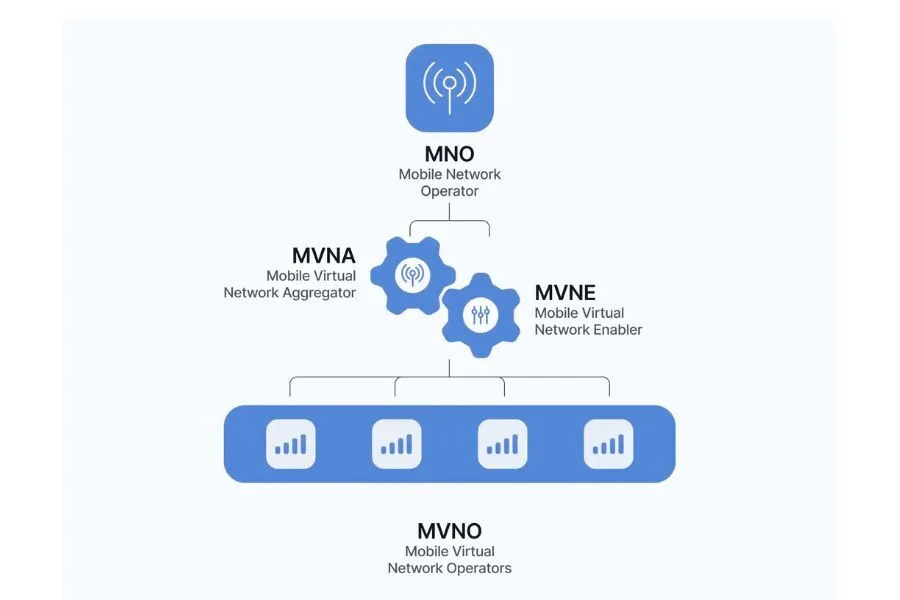
An MVNO is a mobile service provider that doesn’t own cell towers but rents access to them from big carriers. Think of it as a reseller that packages voice, text, and data plans under its own brand.
Why Enterprises Choose MVNOs:
- Control over employee mobile plans
- Branded SIM cards or eSIMs for a unified company look
- Lower telecom costs with bulk pricing
- Direct management of mobile devices and connectivity
What Is CPaaS?
CPaaS is a cloud-based solution that lets you add communication tools—like text, voice, video, or chat—into your apps and software via APIs. You don’t need any hardware or SIM cards.
Why CPaaS Appeals to Businesses:
- Easily scale communications through APIs
- Real-time engagement through your app or website
- Works smoothly with your CRM, support system, or marketing tools
- No telecom infrastructure needed
MVNO vs. CPaaS: Quick Feature Comparison
| Feature | MVNO | CPaaS |
|---|---|---|
| Infrastructure | Mobile network-based | Fully cloud-based |
| Best For | Mobile workforce, IoT devices | In-app communication, customer messaging |
| Scalability | Moderate | Very high |
| Integration | Low | High (API-ready) |
| Cost | Fixed plans | Pay-as-you-go |
| Channels | Voice, SMS, Data | SMS, Voice, Chat, Email, Video |
| Branding | Custom SIMs | White-labeled flows |
| Ideal Use | Utilities, transport, telecom startups | SaaS, eCommerce, fintech, support teams |
When Should You Use an MVNO?
Go with MVNO if your company:
- Needs voice and data plans for mobile employees or remote teams
- Manages a fleet of connected devices like tablets or IoT hardware
- Wants full control over telecom branding and costs
- Operates in high-cost telecom areas and can benefit from custom pricing
Industries like logistics, utilities, and hardware providers often rely on MVNO solutions to keep their teams connected in the field.

When Is CPaaS the Better Option?
Choose CPaaS if your goals are more digital:
- Automating customer messages (like 2FA or shipping updates)
- Embedding video chat or messaging into your app or website
- Creating scalable support or marketing systems through chat and voice
- Serving a wide, possibly global audience with various channels
CPaaS is a go-to for digital-first companies, SaaS platforms, and customer support operations that need to be fast, scalable, and multi-channel.
Pros & Cons
| Model | Pros | Cons |
|---|---|---|
| MVNO | Cost-effective, good for SIM-based needs | Limited digital integration |
| CPaaS | Flexible, rich communication features, API-ready | Costs can grow fast if usage spikes; setup may need dev resources |
Real-World Examples
MVNO in Action:
A Canadian delivery company outfits its drivers with branded SIM cards to maintain consistent mobile coverage while managing data costs.
CPaaS in Action:
A Toronto-based fintech startup uses CPaaS to power customer support via SMS and video, send secure login codes, and deliver instant payment alerts—all from within its app.
Frequently Asked Questions
1. Can I use both MVNO and CPaaS in my business?
Yes! Many companies combine both. MVNO handles mobile connectivity for employees, while CPaaS powers automated and customer-facing communications.
2. Is CPaaS more expensive?
It depends on usage. CPaaS uses a pay-as-you-go model, which can be cheaper for lower volumes or burst campaigns. MVNO plans are often better for constant connectivity needs.
3. What about compliance and security?
Both can be secure. CPaaS often comes with tools for encryption, compliance (like GDPR or CASL), and auditing.
4. Which is better for customer engagement?
CPaaS. With multi-channel support including SMS, WhatsApp, email, and video, it’s made for dynamic and personalized customer interaction.
Final Thoughts
If your business is focused on connecting employees or managing connected devices, MVNO is a reliable, cost-controlled path. If you’re trying to engage customers through personalized, scalable digital channels, CPaaS is a better match.
Of course, many modern enterprises use both. A hybrid approach lets you get the best of both worlds—physical connectivity for your team, and powerful digital tools for your customers.
Need help choosing the right platform for your communication goals? Let’s talk strategy.
Social Media Marketing

Content Marketing